Debt protection is a low-cost safeguard you can add to a loan that cancels or postpones your payments if life takes an unexpected turn, like a disabling injury that keeps you from working. In plain terms, if you get hurt and can’t earn a paycheck, debt protection can step in and cover eligible loan payments for a set time, so your balance doesn’t snowball while you focus on healing.
It’s one of the simplest ways to keep a short-term setback from becoming long-term debt. And the best part is that you don’t have to figure it out alone. We’re here to help you understand your options and choose what fits your life.


Why an injury is one of the biggest hidden risks to your finances
Most of us plan for the bills we can see coming. What’s harder to plan for is a sudden injury that stops your income cold. When a paycheck disappears, the bills don’t. Your loan payments, everyday expenses, and any surprise costs all keep rolling in, and that’s usually how manageable debt turns into stressful debt.
Here’s what often happens without a safety net in place:
- You dip into savings faster than you’d like, sometimes emptying an emergency fund in a matter of weeks.
- You lean on credit cards to cover the gap, which adds high-interest debt on top of everything else.
- You fall behind on loan payments, which can lead to late fees and a dip in your credit score.
- The stress builds, and financial worry makes recovery even harder.
Debt protection is designed to interrupt that cycle before it starts. It’s a small, upfront decision that can save you from big financial pain later.
How does debt protection actually work?
Debt protection is an optional add-on to an eligible loan, like an auto loan, personal loan, or credit card. You choose the coverage when you take out the loan, or you can ask about adding it to a loan you already have. Then, if a covered event happens, your loan payments can be canceled or postponed depending on the plan you pick.
Coverage usually applies to a few key life events, such as:
- Disability or injury that leaves you unable to work
- Involuntary job loss that isn’t your fault
- Loss of life, which can cancel the remaining balance so it doesn’t pass to your family
The specifics, like how long payments are covered and which events qualify, depend on the plan you choose. That’s exactly the kind of thing our team can walk you through, so you know precisely what you’re getting before you commit.


Debt protection vs. an emergency fund: do you need both?
It’s a great question, and the honest answer is that they work best together. An emergency fund is your own cash cushion you can use for anything. Debt protection is targeted coverage that specifically handles your loan payments during a covered event.
Think of it this way. Your emergency fund covers groceries, rent, and daily life. Debt protection covers your loan so that money doesn’t have to. Having both means your savings last longer and your debt stays under control when you need breathing room the most.
How to get out of debt (and stay out) after a setback
If an injury has already put you behind, or you just want a smarter plan going forward, these steps can help you take
back control. None of them require perfect finances. They just require a starting point.
- Get a clear picture of what you owe
You can’t tackle debt you can’t see. List every balance, interest rate, and monthly payment in one place. This one step alone often makes debt feel more manageable, because you finally know what you’re working with. - Pay the essentials first
Focus on the payments that keep your life stable, like housing, utilities, and any secured loans. If you have debt protection on a loan and you’ve had a covered injury, this is the moment it goes to work for you. - Choose a payoff strategy that fits you
Two popular approaches work well:
- The snowball method: pay off your smallest balance first for quick wins that keep you motivated.
- The avalanche method: pay off your highest-interest debt first to save the most money over time.
Neither is wrong. The best method is the one you’ll actually stick with.
- Consolidate high-interest debt when it makes sense
If you’re juggling several high-interest balances, rolling them into one lower-rate loan can lower your monthly payment and simplify your life. We can help you compare your options and see if consolidation is a smart move for your situation. - Build protection into your next loan
Once you’re back on solid ground, set your future self up for success. Adding debt protection to a new loan is a small step that can prevent the whole cycle from repeating.

Why members choose Community Choice for debt protection
We’ve been helping neighbors keep life simple since 1935, and that starts with looking out for each other during the moments no one plans for. When you bank with us, you’re never just an account number. Your needs matter, and our advisors are here to help you find a solution that actually works for you, without judgment and without pressure.
Here’s what you can count on:
- Real guidance from real people who take the time to understand your goals
- Simple, clear explanations so you always know what your coverage does
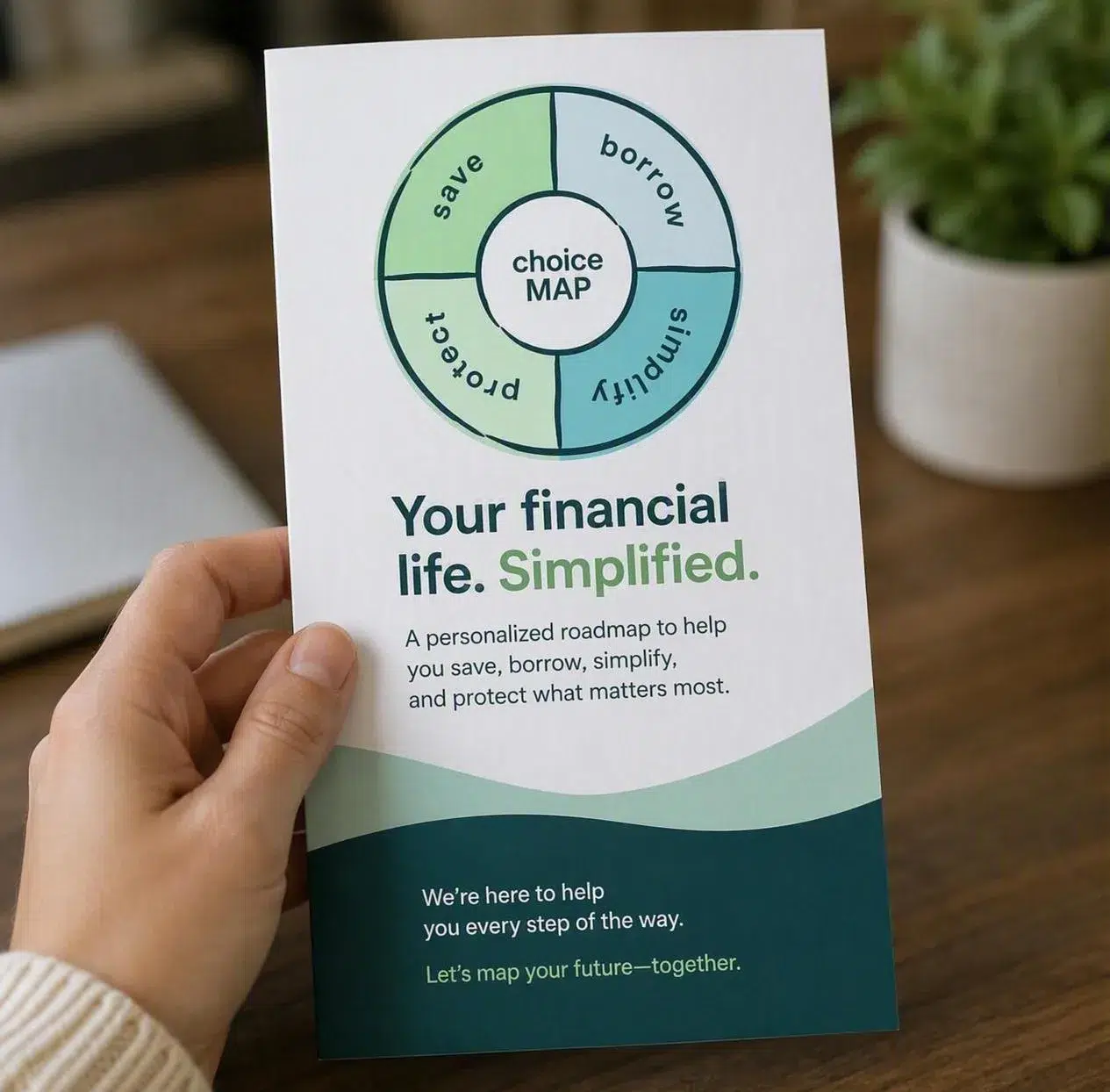
- Flexible tools like Choice Map to help you plan, budget, and stay on track
- A partner for the long haul, not just a one-time transaction
Life happens. Let’s find a solution that works for you.

Ready to protect yourself from unexpected debt?
You don’t have to wait for a setback to start planning for one. Talk with a Personal Advisor today to learn how debt protection can fit your loans and your budget. It’s a quick conversation that could save you a world of stress down the road.
Frequently asked questions
What is debt protection on a loan? Debt protection is an optional add-on to an eligible loan that can cancel or postpone your payments if a covered event happens, such as a disabling injury, involuntary job loss, or loss of life. It helps keep a temporary hardship from turning into long-term debt.
Does debt protection cover me if I’m injured and can’t work? Yes, disability or injury that leaves you unable to work is one of the most common covered events. Depending on your plan, your loan payments can be canceled or postponed while you recover. Our team can explain exactly what your plan covers before you sign up.
Is debt protection the same as insurance? Not quite. Debt protection is a benefit added directly to your loan that cancels or postpones payments during covered events, rather than a separate insurance policy. It’s designed to be simple and tied specifically to the loan it protects.
How much does debt protection cost? The cost depends on the loan and the coverage you choose, and it’s usually a small addition to your regular payment. Talk with an advisor to see the exact cost for your situation.
Can I add debt protection to a loan I already have? In many cases, yes. Reach out to our team to find out whether your existing loan is eligible and how to add coverage.
What’s the fastest way to get out of debt after an injury? Start by listing everything you owe, cover your essential payments first, and choose a payoff strategy like the snowball or avalanche method. If you have debt protection on a loan, use it. And if high-interest balances are weighing you down, ask us about consolidating them into one lower-rate payment.
How do I get started with debt protection at Community Choice? Just reach out to schedule a quick chat with a Personal Advisor. We’ll review your loans, explain your options, and help you choose the coverage that fits your life.
TruStage® is the marketing name for TruStage Financial Group, Inc., its subsidiaries and affiliates. DP-9153783.1-0926-1028